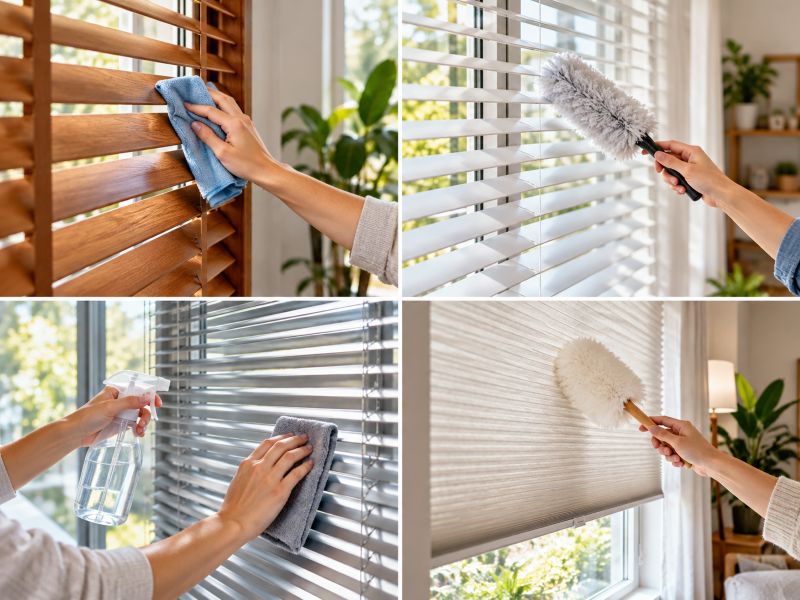

Are You Cleaning Your Window Blinds the Right Way? Most Edmonton Homeowners Are Not.
Most people wipe their blinds once in a while and call it done. But depending on the type of blind you have, that one habit could be damaging the fabric, bending the slats, or making the dust worse. Here is what actually works by blind type.
Why Edmonton Homes Need Extra Attention
Edmonton's dry climate means dust does not just settle, it clings. Add in the long winters with sealed windows, forced-air heating, and the occasional construction dust from the city's non-stop new builds, and your blinds are working harder than most.
Cleaning them wrong does not just look bad. It shortens their life.
The One Rule That Applies to Every Blind Type
Before anything else - always dust first, wash second.
Wiping a dusty blind with a damp cloth does not clean it. It turns dust into a paste that works itself into the fabric or the slat grooves. Dry removal always comes first.
Roller Blinds
Roller blinds collect dust along the bottom hem and across the face of the fabric. Most people wipe them down while they are rolled up, which misses most of the surface.
Do this instead:
- Roll the blind all the way down before cleaning
- Use a dry microfibre cloth or the upholstery attachment on your vacuum
- For marks or stains, use a barely damp cloth with mild soap and never soak the fabric
- Let it dry fully before rolling back up and rolling damp fabric causes mould and warping
What to avoid: Harsh sprays, soaking, and steam cleaners. Roller blind fabric is not washable.
Zebra Blinds
Zebra blinds have alternating sheer and solid bands — and each requires slightly different handling. The sheer sections are delicate and tear easily if you press too hard.
Do this instead:
- Use a light vacuum on the lowest suction setting with a soft brush attachment
- For the solid bands, a dry microfibre cloth works well
- For the sheer sections, hold the fabric taut from behind while you dust and never rub
- Spot clean with a damp cloth only on the solid bands, not the sheer
What to avoid: Removing zebra blinds to wash them. The tension mechanism is difficult to reassemble and the fabric warps easily when wet.
Honeycomb Blinds
The cells that make honeycomb blinds so good at insulation are also dust traps. Dust settles inside the cells and a standard wipe does nothing to remove it.
Do this instead:
- Use a hairdryer on the cool setting to blow dust out of the cells
- Follow with a soft brush vacuum attachment along the face of the blind
- For stains, spot clean with cold water and a very mild detergent - blot, never rub
- Allow to air dry completely with the blind fully extended before raising
What to avoid: Hot water, steam, and submerging honeycomb blinds in water. The cell structure can collapse and will not recover.
Roman Blinds
Roman blinds are fabric and fabric holds dust, pet hair, and cooking smells more than any other blind type. Edmonton kitchens and living rooms with Roman blinds need more frequent attention than most people realise.
Do this instead:
- Vacuum regularly using the upholstery attachment, this is the most important step
- Check the care label on the fabric before doing anything else
- Most Roman blinds can be spot cleaned with a damp cloth and mild detergent
- Some fabric types can be carefully hand washed but only if the care label confirms it
- Always air dry flat, never in a dryer
What to avoid: Machine washing without checking the label first. Roman blind fabric shrinks, and even a small amount of shrinkage means the blind will no longer hang flat or reach the sill.
Printed Blinds
Printed blinds are roller blinds at their core but the printed face needs a little extra care to keep the design sharp and the colours from fading.
Do this instead:
- Dust with a dry microfibre cloth - always wipe in one direction, not in circles
- Spot clean marks with a barely damp cloth and no detergent on the printed face
- Clean the back of the blind normally with mild soap and water if needed
What to avoid: Any abrasive cloth or cleaning spray directly on the printed surface. It will lift the design over time.
How Often Should You Actually Clean Them
This is where most Edmonton homeowners fall short. Once a year is not enough.
- Light dusting - every 2 to 4 weeks
- Deeper clean - every 3 to 4 months
- Full clean - once a year, ideally during spring cleaning when windows are opened after the long winter
If you have pets, allergies, or live near a construction zone, move everything up by a month.
The Short Version
- Dust before you wipe as always
- Match your cleaning method to your blind type
- Never use heat, soaking, or harsh chemicals on any fabric blind
- Clean more often than you think you need to Edmonton's dry air makes dust worse than most cities
Clean blinds last longer, look better, and actually do their job properly. The method matters more than the effort.
FAQs
Q1: Can I take my blinds down to wash them?
For most fabric blinds like Roman and printed especially, removing them risks damaging the mechanism or warping the fabric. Spot cleaning in place is almost always the better option.
Q2: My blind has a stubborn stain that will not come out. What should I do?
Cold water and a small amount of mild dish soap, blotted gently, removes most stains. If it does not shift, contact the manufacturer before trying anything stronger, the wrong product can permanently damage the fabric.
Q3: How do I stop dust from building up so quickly?
In Edmonton specifically, running a humidifier during winter months reduces the static that attracts dust to blind fabric. Regular vacuuming of the surrounding area also makes a noticeable difference.
Q4: My honeycomb blind has a yellowing cell. Can I fix it?
Yellowing is usually caused by sun exposure over time and cannot be reversed with cleaning. If it is a stain rather than sun damage, cold water spot cleaning is worth trying before assuming permanent damage.