Are Your Bedroom Blinds Affecting Your Sleep? Here’s How to Fix It
You're exhausted but wide awake at 10 PM in June. The room isn't dark enough, and your body has no idea it's bedtime. Calgary's long summer days are beautiful but they quietly wreak havoc on sleep.
This blog covers how light affects your sleep cycle, what Calgary's seasonal daylight does to your body clock, and which window coverings actually create the darkness your bedroom needs.
Light: The Most Underrated Sleep Disruptor
Most people blame stress, screens, or caffeine when sleep gets difficult. Light rarely makes the list but it probably should be at the top of it.
Here's why: your body runs on an internal clock called the circadian rhythm. It uses light as its primary signal to decide when to feel awake and when to wind down. When light enters the room, even at low levels, it tells your brain to stay alert.
This means your bedroom environment matters far more than most people realise. Even a streetlight through a thin blind, or early morning sun at 4:58 AM, is enough to interrupt deep sleep without you knowing why you feel unrested.
Light affects sleep in three key ways:
- It suppresses melatonin, the hormone your body needs to fall and stay asleep
- It shortens the deep sleep stages, the ones responsible for physical recovery
- It causes earlier waking, even when you don't fully wake up, light shifts you into lighter sleep cycles
What Calgary's Long Summer Days Do to You
Calgary sits at a latitude where summer daylight is extreme by most standards. At peak, the city sees close to 17 hours of daylight with sunrise before 5:30 AM and sunset well past 9 PM.
For your circadian rhythm, that's a long time to be receiving light signals. The body doesn't automatically adjust just because the calendar says it's nighttime. If your bedroom windows and blinds aren't blocking that light effectively, your brain is essentially receiving mixed messages from dusk to dawn.
The result shows up as:
- Difficulty falling asleep before it's fully dark outside
- Waking earlier than intended, often around 5 AM
- Feeling unrested despite a full night in bed
- Low energy and mood dips that are hard to explain
This isn't a sleep disorder. In many cases, it's simply a light control problem and that's a much easier fix.
The Science Behind Darkness and Sleep Quality
Darkness doesn't just help you fall asleep, it changes the quality of sleep you get.
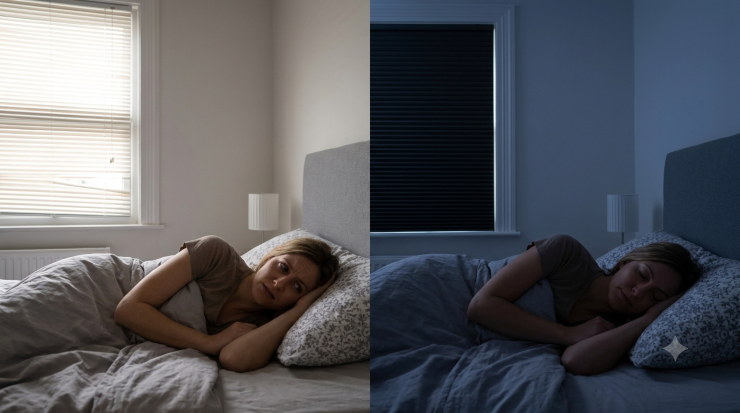
When your room reaches a certain level of darkness, your brain shifts into deeper, more restorative sleep stages. These are the stages where memory consolidates, the immune system repairs, and the body recovers from the day. Light interference, even brief, pulls you out of those stages prematurely.
| Light Level in Bedroom | Effect on Sleep |
| Bright or partial light | Delays melatonin release, harder to fall asleep |
| Low ambient light | Shortens deep sleep stages, more restless nights |
| Near-complete darkness | Supports full melatonin production, deeper sleep cycles |
| Full darkness | Optimal conditions for restorative sleep |
The takeaway is straightforward - the darker the room, the better the sleep quality, particularly during Calgary's bright summer months.
Which Blinds Actually Create Bedroom Darkness
Not all window blinds in Calgary are built for this. Light-filtering blinds soften the light, they don't eliminate it. For genuine sleep-supporting darkness, the covering needs to block light at the fabric level, not just reduce it.
- Calgary homeowners choose blackout roller shades most often for bedrooms which are the most direct solution. The fabric is woven tightly enough that no meaningful light passes through. Paired with a good side-seal fit, they block early morning sun effectively, even in June when the sun rises before most alarm clocks.
- Honeycomb blinds in Calgary with a blackout fabric option are worth considering for bedrooms that also deal with temperature, their cellular structure adds an insulating layer that keeps rooms cooler in summer and warmer in winter, which also supports better sleep.
- Zebra blinds in Calgary are a popular choice for their look and light diffusion but they're better suited to living rooms than bedrooms where full darkness is the goal. They manage light beautifully, but a solid blackout fabric will always outperform an alternating weave for sleep purposes.
For those who want complete flexibility, custom blinds in Calgary with a double roller setup - one blackout, one light-filtering, give full control at any time of day without compromising on style.
Light Control for Shift Workers
If you sleep during the day, the challenge multiplies. Daylight at full intensity, streaming through a standard window covering is the strongest possible signal for your body to stay awake. Shift workers in Calgary deal with this daily.
What actually makes a difference:
- True blackout fabric; not light-filtering, not semi-opaque, at the window
- Side channels or cassette headrails that prevent light bleeding around the edges of the blind
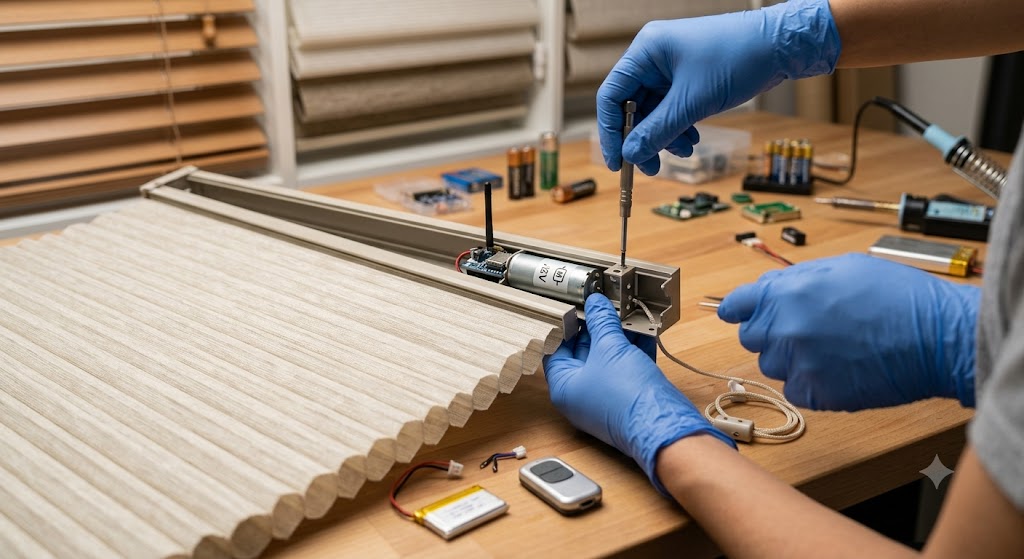
- Automated blinds in Calgary are scheduled to close before you get home and open when you wake, removing the need to manage it manually after a night shift
- Layering with curtains for an additional barrier if the window faces direct morning sun
The combination of the right fabric and a well-fitted frame does most of the work. Windows and blinds that work together as a sealed system, rather than a covering that just hangs in front of the glass, make the most noticeable difference for daytime sleepers.
One Change That Could Transform Your Sleep
It doesn't require a full bedroom renovation. In most cases, it comes down to one window, one blind, and the right fabric choice.
If your current bedroom covering lets in light - at the edges, through the fabric, or at the top of the frame, that's where to start. A properly fitted blackout roller shade or honeycomb blind with blackout fabric closes that gap and changes the room meaningfully.
Quick checklist for better bedroom light control:
- Blackout fabric; not just light-filtering
- Fitted frame with minimal edge gaps
- Covers the full window including any gap above the headrail
- Considers side light bleed; especially on inside-mount installations
- Automated or easy to operate; so it actually gets used every night
Beautiful blinds in Calgary aren't just about how a room looks; in a bedroom, they directly affect how you feel every morning.
Better Sleep Is One Blind Change Away
Sleep quality rarely has one single cause but light control is one of the most overlooked and most fixable parts of the equation. If Calgary's long summer days are showing up in how you feel each morning, your bedroom window covering is worth a closer look.
Start with the fabric and the fit. Then decide what works for your room and routine.
Sun Blinds YYC carries roller shades, blackout blinds, honeycomb blinds, and custom options across their Calgary range each suited to different bedroom needs and light conditions. Browse the full range or book a free in-home consultation to see what fits your windows.
FAQs
Q1: Do blackout blinds make a room completely dark?
A true blackout fabric blocks nearly all light through the material. Edge gaps around the frame can still let some light in; a cassette headrail or side channels minimise this significantly.
Q2: Are zebra blinds good for bedrooms?
Zebra blinds manage light beautifully but don't provide full blackout. They suit bedrooms where some morning light is welcome. For complete darkness, a blackout roller or honeycomb blind is a stronger choice.
Q3: Can automated blinds help with sleep schedules?
Yes, scheduling blinds to close at a set time each evening and open after your target wake time removes manual effort and supports a more consistent sleep-wake routine.
Q4: Do honeycomb blinds block light as well as roller shades?
Honeycomb blinds with blackout fabric perform comparably to blackout rollers. They also add insulation by keeping the room cooler in Calgary summers, which supports better sleep alongside the darkness.
Q5: How much does light actually affect sleep quality?
Even low-level ambient light during sleep has been shown to reduce time spent in deep sleep stages. For light-sensitive sleepers or shift workers, the difference between a light-filtering and blackout blind is felt the next morning.