How to Clean Zebra Blinds: Tips for Every Season and Room
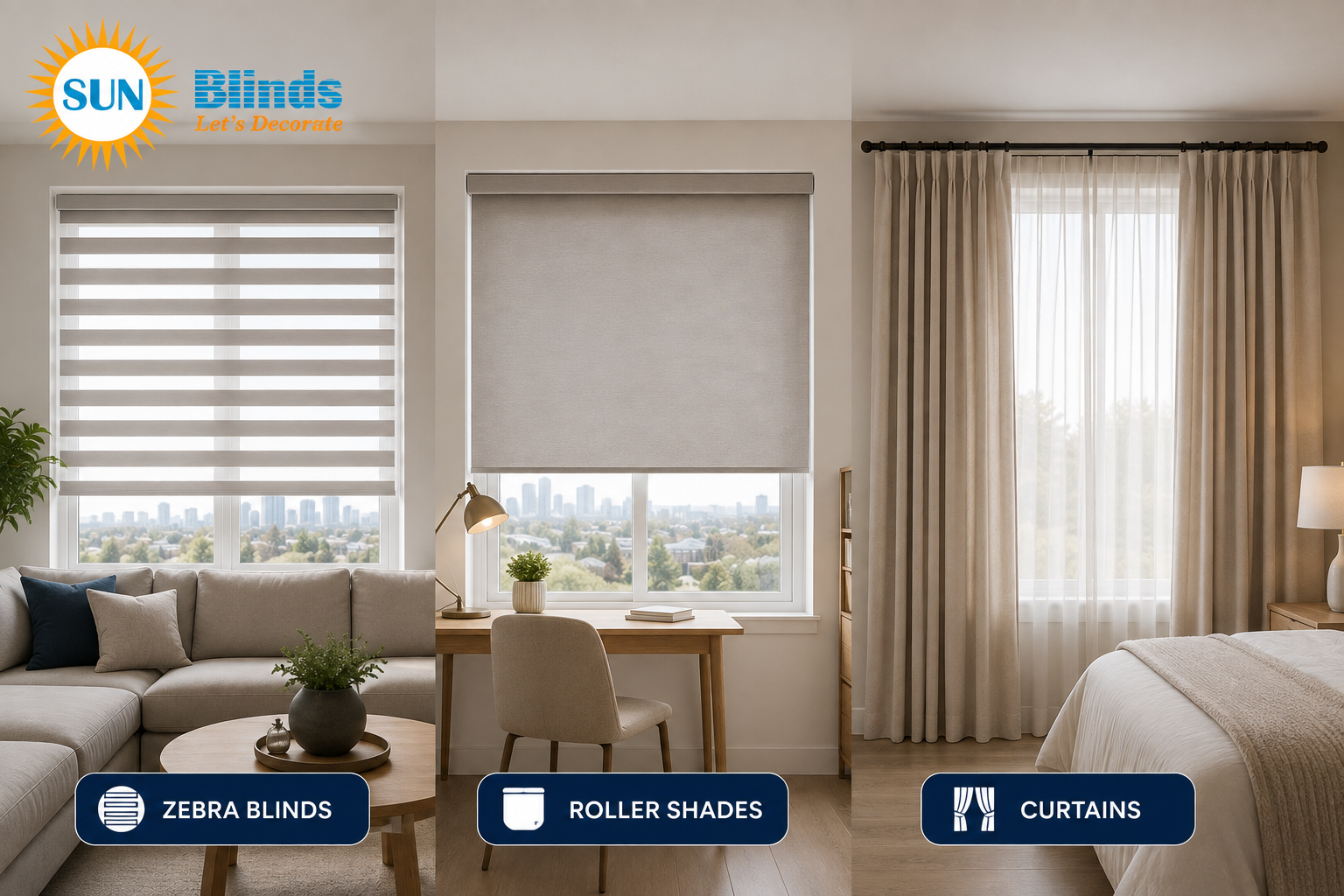
If you live in Edmonton, you know how quickly furnace dust, spring grit, and long summer sunlight can settle on your window coverings. Zebra blinds — also called Combi Blinds or Dual Shades — use alternating sheer and solid fabric bands to control light. This guide shows you how to clean zebra blinds season by season and room by room.
Why Clean and Maintain Zebra Blinds Regularly?
- Forced-air furnace dust: Edmonton heating systems often run for 6+ months, constantly circulating fine dust through your home.
- Dry winter static: When indoor humidity drops below 20%, zebra fabric can attract more fine particles.
- Spring chinook grit: Chinook winds can carry dust that sneaks in through small gaps around windows.
- Long summer UV exposure: Edmonton’s 17-hour June daylight can speed up fading on south and west-facing blinds.
- Freeze-thaw moisture: Condensation in October and March can wick into fabric hems if not blotted quickly.
What Works vs. What Damages Zebra Fabric
Ideal:
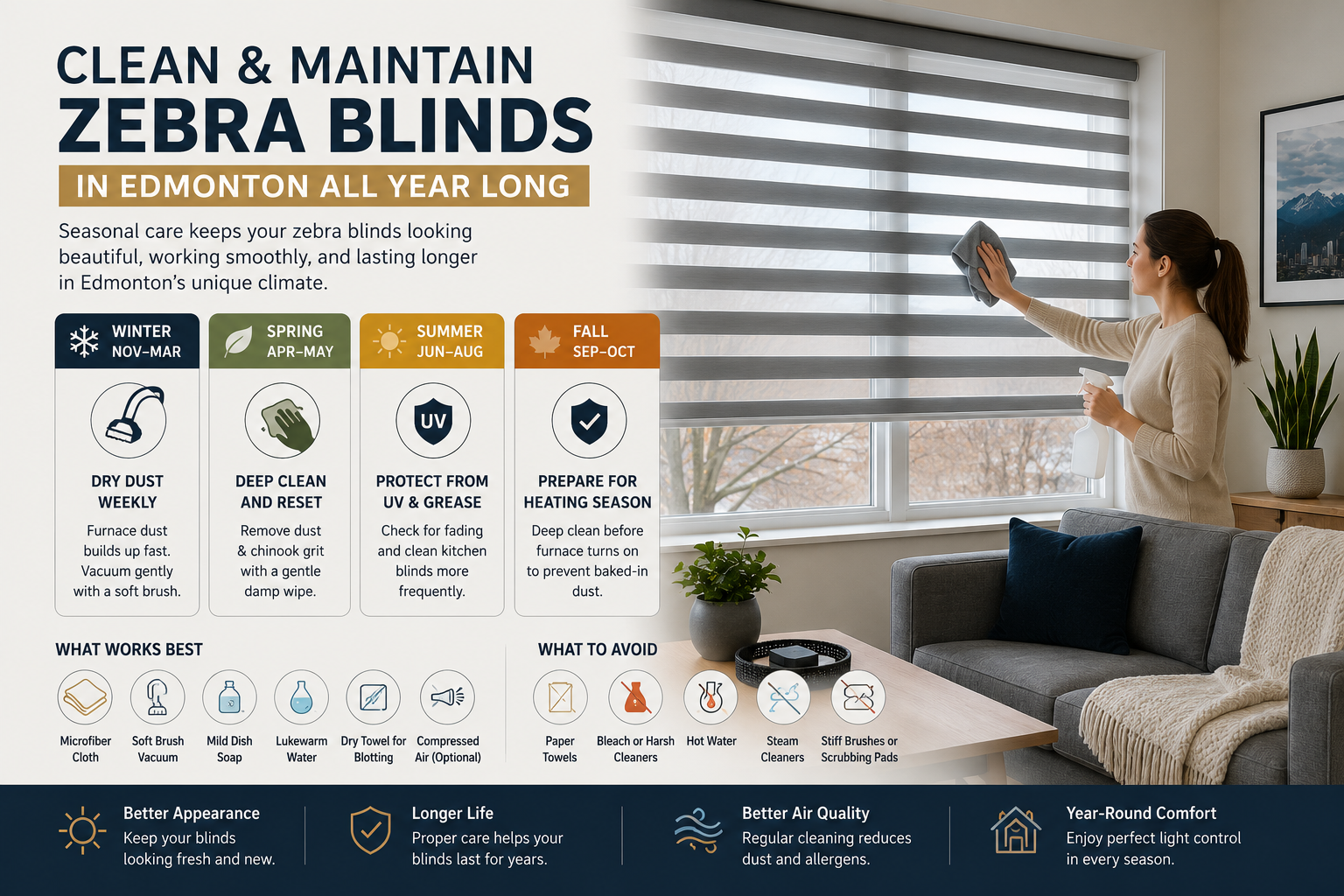
- Microfiber cloth: Lint-free, soft, and safe for sheer zebra fabric.
- Handheld vacuum with soft brush attachment: Ideal for lifting dust without pulling threads.
- Mild dish soap: Use only 2–3 drops in lukewarm water.
- Lukewarm water: Gentle enough for fabric bands and hems.
- Dry towel for blotting: Best for moisture near the bottom rails and window condensation.
- Compressed air: Optional, but useful for the headrail and roller tube.
To be Avoided:
- Paper towels: They can snag delicate, sheer fabric threads.
- Bleach or ammonia-based sprays: Products like Windex can damage fabric and leave stains.
- Stiff brushes or scrubbing pads: These can pill, stretch, or tear the sheer layer.
- Hot water: Heat can weaken fabric structure and affect bonding.
- Steam cleaners: Steam adds too much moisture and can damage zebra blinds.
Seasonal Guide: How to Clean Zebra Blinds in Edmonton
Winter: November–March — Monthly Dust, No Wet Cleaning
Winter is when zebra blinds maintenance matters most. Your furnace runs daily, dust is moving constantly, and dry air makes fabric more clingy.
Dry dusting should be weekly, especially in living rooms, bedrooms, and home offices.
Avoid wet cleaning during extreme cold. Condensation on cold glass slows drying, and rolling the blind up while damp can trap moisture inside the fabric layers.
Watch the bottom hem on north-facing windows. Freeze-thaw condensation can leave watermarks, so blot moisture immediately with a dry towel.
Spring: April–May — The Annual Reset
After 5+ months of furnace heat, dust often settles lightly into the fabric. Spring is the best time for a full damp wipe-down.
Chinook winds in March and April can bring fine dust through window seals, so clean after the last major dusty wind spell, not before.
For a proper spring deep clean:
- Fully extend the blind so both fabric layers are accessible.
- Lightly vacuum from top to bottom using a soft brush attachment.
- Wipe each panel with a damp microfiber cloth and mild soap solution.
- Follow with plain water on a clean cloth to remove soap residue.
- Air dry fully extended for 45–60 minutes before rolling up.
Summer: June–August — UV Check and Kitchen Blinds Attention
Summer is the easiest season for most rooms, but UV exposure becomes the main issue.
Check south and west-facing zebra blinds Edmonton homes rely on for light control. If you notice yellowing or fading, cleaning will not reverse it, but better UV habits can slow future wear.
Kitchen blinds need more attention. Grease vapour mixes with furnace dust and becomes tacky by midsummer, so clean kitchen zebra shades every 4–6 weeks.
Bedroom and living room blinds usually need only a mid-summer dust and spot-check.
Fall: September–October — Pre-Heating Season Deep Clean
Fall is the most important clean of the year.
Do a full damp wipe-down of every set of zebra blinds before the furnace turns on in mid-October. Once heating begins, leftover dust and residue can bake slowly into the fabric through winter.
Think of fall cleaning as your clean baseline. It makes winter window blinds care Edmonton homeowners need much easier.
Room-by-Room Guide: What Changes in Each Space
Living Room
Living rooms usually get the highest UV exposure, especially if the windows face west.
If you have pets, use a lint roller before vacuuming. It lifts hair from sheer panels without pulling or snagging the fabric.
Check colour once a year on west-facing blinds. Edmonton’s afternoon summer sun can be stronger than it looks.
Bedroom
Bedrooms are usually low-maintenance.
The main concern is morning condensation during cold snaps. If moisture touches the bottom hem, place a towel on the sill overnight and blot the hem dry each morning until temperatures improve.
Kitchen
Kitchen blinds collect the toughest residue.
Grease vapour and furnace dust create a tacky layer faster than in any other room. Add one extra drop of dish soap to your cleaning water for better degreasing.
Clean kitchen zebra blinds every 4–6 weeks, not quarterly.
Home Office
Home offices collect paper dust and electronic dust from computers, printers, and chargers.
This dust can cling in a very fine layer that regular room cleaning often misses. If the room is used daily, vacuum your home office blinds weekly.
Bathroom
Edmonton’s dry air means bathrooms may feel less steamy than homes in humid cities, but the moisture risk is still real.
After showering, leave blinds fully extended and keep the bathroom door open for airflow. Never roll zebra blinds up while damp.
Maintenance Tips to Keep Your Zebra Blinds in Shape
- Handle with care: Use the chain or motorized control instead of pulling the fabric by hand.
- Watch winter condensation: If moisture forms on Edmonton windows, dry the glass and sill so dampness does not touch the fabric.
- Keep them away from heat: Avoid placing space heaters too close to zebra blinds.
- Clean room by room: Kitchens, bathrooms, and pet areas may need more frequent attention.
- Check rolling alignment: If the fabric starts rolling unevenly, stop using it and get it checked.
- Schedule occasional expert care: Sun Blinds can help identify wear before it becomes a replacement issue.
When Cleaning Is No Longer Enough: Signs It's Time to Replace
- Permanent yellowing or fabric discolouration: UV damage and chemical residue cannot be reversed by cleaning.
- Uneven rolling or the blind won’t stay level: This can mean the roller mechanism is worn or the fabric has stretched unevenly.
- Persistent musty odour after cleaning: This may indicate mildew inside the fabric layers or roller tube that surface cleaning cannot reach.
- Sheer panels snagged, pilled, or torn: Once the sheer layer is physically damaged, the light-diffusing effect is permanently compromised.
If cleaning no longer brings your blinds back, you can explore Zebra Blinds from Sun Blinds or book a simple consultation for the right next step.
Final Thoughts
Zebra blinds are easy to maintain when you clean them with the right method at the right time of year. Edmonton homes deal with furnace dust, dry air, condensation, and long summer sunlight, so a seasonal routine makes a real difference.
A little care now can help your blinds look cleaner, roll smoother, and last longer through every season.
For help choosing, maintaining, or replacing zebra blinds, contact Sun Blinds Inc. in Edmonton today.
FAQs About Cleaning and Maintaining Zebra Blinds
Can I wash zebra blinds in a washing machine?
No. Zebra blinds should never be machine washed because the fabric layers, sheer panels, and rolling structure can stretch, tear, or lose alignment.
How often should zebra blinds be cleaned?
For most Edmonton homes, dry dust weekly in winter and do a deeper damp wipe in spring and fall. Kitchen blinds may need cleaning every 4–6 weeks because grease builds up faster.
How is cleaning zebra blinds different from cleaning regular roller blinds?
Zebra blinds have alternating sheer and solid fabric bands, so they need gentler handling than regular roller blinds. Avoid scrubbing, soaking, and pulling on the sheer layer.
How to clean a motorised zebra blind?
Clean the fabric the same way, but keep water away from the motor, battery pack, remote components, and headrail wiring. Use a dry microfiber cloth or compressed air around the motor area.