Do Curtains Actually Keep the Cold Out? Here’s The Truth
Your heating is on and the thermostat is set, but that room near the window still feels cold.
And you've probably wondered “Would heavier curtains actually help?”
It depends entirely on the curtain especially in Edmonton where winters are long and heating bills feel longer. Some curtains make a real difference whereas some do almost nothing.
Why Windows Let Cold In Even When They're Closed
Even a closed, double-pane window loses heat. Cold glass chills the air immediately around it. That cooled air sinks to the floor, creating a draft, even when there's no gap or crack anywhere.
This is called a convection current, and it's why rooms with large windows feel colder than rooms without them.
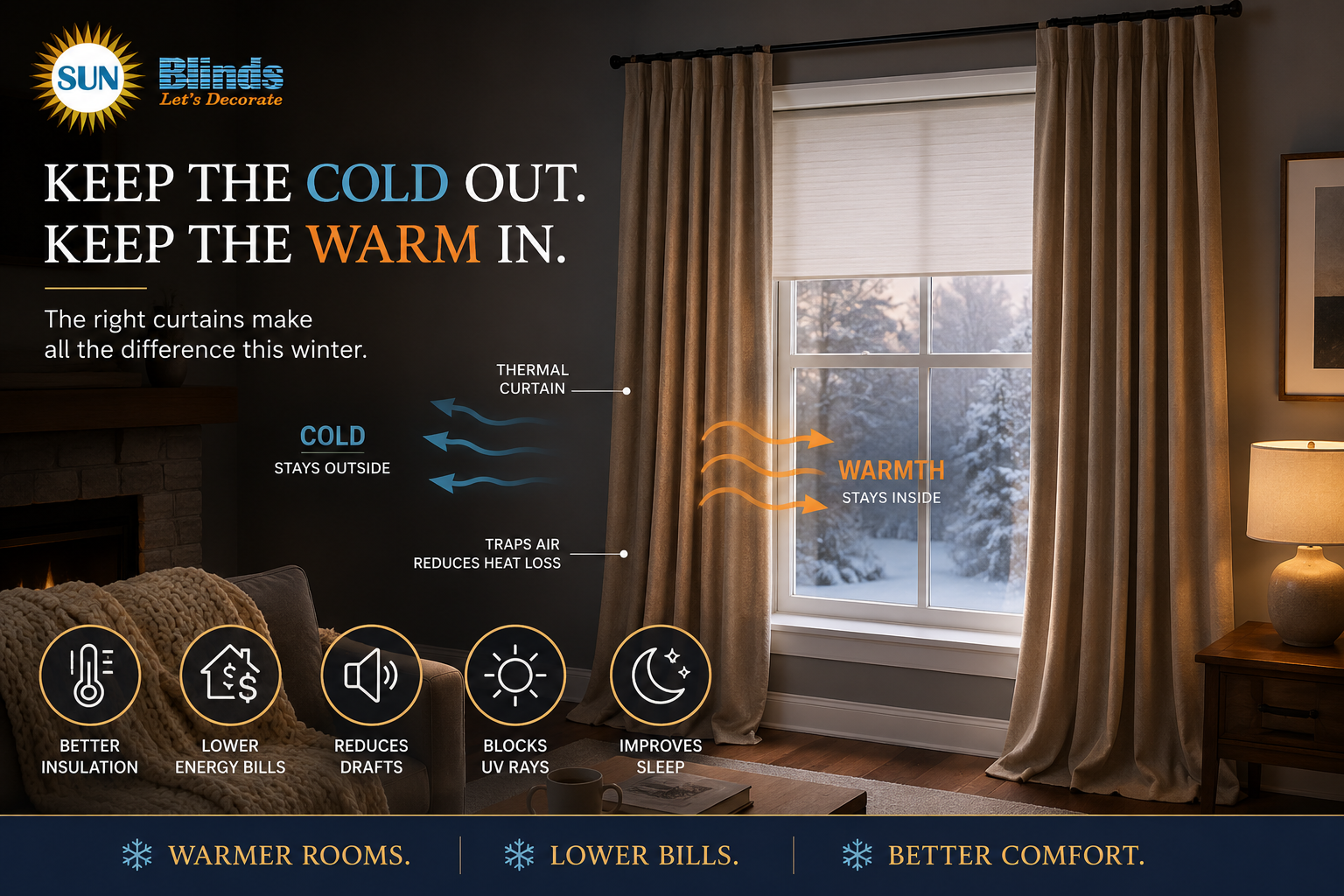
A curtain placed correctly acts as a barrier between the cold glass and the warm room, slowing that process down significantly.
Not All Curtains Insulate: Here's the Difference
A thin, decorative curtain panel does very little for insulation. It looks good. It adds softness to a room. But it won't stop cold air from moving through it.
What actually determines insulation value:
- Fabric weight: heavier fabric slows air movement more effectively
- Lining: an unlined curtain barely insulates; a thermal lining changes everything
- Length and width: curtains that don't reach the floor or cover the full window leave gaps that let cold air pass freely
- How close to the wall they hang: the tighter the seal around the window, the better
| Curtain Type | Insulation Level | Best For |
| Sheer / unlined | Very low | Style only, warmer months |
| Standard lined | Moderate | Living rooms, mild winters |
| Thermal lined | Good | Bedrooms, cold-facing windows |
| Blackout + thermal | Strong | Bedrooms, nurseries, north-facing rooms |
| Layered (blind + curtain) | Strongest | Any room in a Edmonton winter |
What Thermal Curtains Actually Do
Thermal curtains have an extra layer, usually a foam or acrylic backing sewn between the fabric and the lining.
This backing does two things:
- Traps a pocket of air between the curtain and the glass, air is a poor conductor of heat, so this slows heat loss noticeably
- Stops convection, the cold air that sinks off the glass is caught behind the curtain instead of flowing into the room
Studies show thermal curtains can reduce heat loss through windows by up to 25% when hung correctly. That's a meaningful difference on a -20°C Calgary or Edmonton night.
How You Hang The Curtains Do Matter
A high-quality thermal curtain hung badly will underperform every time.
The three things that matter most:
- Height: Mount the rod as close to the ceiling as possible, ideally within 5 to 10 cm. Warm air rises and escapes above a curtain hung low. Ceiling-height hanging traps more warmth in the room.
- Width: The curtain should extend at least 15 to 20 cm beyond the window frame on each side. This closes off the gap where cold air sneaks around the edges.
- Length: Floor-length curtains outperform shorter ones every time. For maximum insulation, curtains that puddle slightly on the floor create a near-complete seal at the bottom.
Curtains Alone vs Curtains Paired With Blinds
Here's something most people don't realise that curtains work even better when layered with a blind or shade.
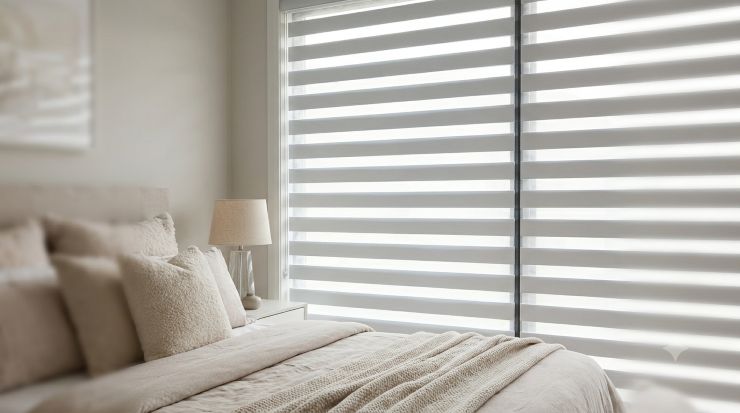
A roller shade or zebra blind covers the glass directly, reducing how much the window chills the air in the first place. The curtain then acts as a second barrier over that.
How layering works in practice:
- Roller shade blocks direct cold transfer at the glass
- Curtain traps the air between itself and the blind
- Two layers of trapped air is equal to significantly better insulation than either alone
This combination is one of the most effective and affordable ways to winter-proof a window in an Edmonton home, without replacing the window itself.
The most popular pairing right now in Edmonton homes: thermal-lined curtains over roller shades for bedrooms, and linen curtains over zebra blinds for living rooms.
Where Curtains Make the Biggest Difference
Not every room benefits equally. Here's where to prioritise:
| Room | Why Curtains Help Here |
| Bedroom | Large glass surface, overnight exposure to cold - thermal curtains make a noticeable sleep comfort difference |
| Living room | West or north-facing rooms lose heat fast in evenings - heavy drapes help retain warmth after sunset |
| Basement | Windows are often small but poorly insulated - well-fitted curtains prevent cold air pooling at floor level |
| Older homes | Draughty frames and single-pane glass benefit most from curtain layering as a low-cost fix |
Common Curtain Mistakes Worth Avoiding
To save you from a frustrating purchase:
- Sheer curtains alone: they add zero meaningful insulation in winter
- Short curtains: leaving a gap at the bottom defeats the purpose entirely
- Narrow curtains: if they only cover the glass but not the frame, cold air moves around them freely
- Unlined panels marketed as "thermal": check that the listing specifies an actual thermal or foam backing, not just thicker fabric
Warm Rooms Start With the Right Window Covering
A well-chosen curtain that is thermal lined, properly hung, the right size does more than keep your room warmer. It reduces how hard your heating system works, which lowers your energy bills over time. It also blocks UV that fades furniture and flooring. And it simply makes a room feel more complete.
So the answer to the question is yes, curtains do keep cold out, but only when you choose the right type and hang them properly. A thin decorative panel won't do much. A well-lined, floor-length curtain paired with a blind behind it can make a room feel noticeably warmer.
If you're looking for curtains in Edmonton or window blinds in Edmonton that are made for the winters, Sun Blinds has been helping homeowners find the right fit since 2003 and connects the right products to the right homes, so your windows work as hard as your heating does.
FAQs
Q1: Do regular curtains keep cold out in an Edmonton winter?
Standard unlined curtains offer very little insulation. For Edmonton winters, you need thermal-lined or blackout curtains, ideally floor-length and extending beyond the window frame on both sides for a proper seal.
Q2: How much can thermal curtains reduce my heating bill?
When hung correctly, thermal curtains can reduce heat loss through windows by up to 25%. The actual savings depend on your home's window size, existing insulation, and how cold your winters get, results are real but vary by home.
Q3: Is it better to use curtains or blinds for insulation in winter?
Both help but layering them together is more effective than either alone. A roller shade or zebra blind at the glass reduces cold transfer directly, while a thermal curtain traps air over it, creating two insulating barriers instead of one.
Q4: Do blackout curtains also insulate against cold?
Blackout curtains block light effectively, but insulation depends on the lining, not the blackout layer. Look for curtains labelled both blackout and thermal, that combination gives you darkness and genuine cold protection together.
Q5: Does curtain length actually affect how warm a room feels?
Yes, significantly. Floor-length curtains prevent cold air from flowing out under the fabric. Short curtains leave a gap that allows chilled air to circulate freely into the room, reducing insulation effectiveness noticeably.