
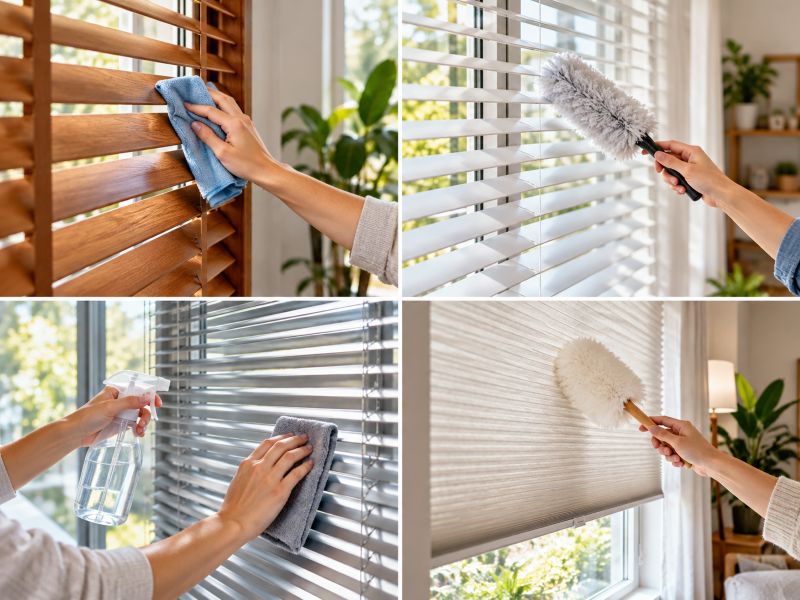
How to Clean Blinds Properly: Safe Methods for Each Blind Material
You dust the furniture. You wipe the counters. But the blinds? They wait until they really can't anymore.
When that moment arrives, most people reach for whatever is closest: a wet cloth, a sponge, sometimes even a bathtub, without checking whether that method is safe for the specific blind in front of them. The wrong approach doesn't just miss the dirt. It can strip coatings, damage fabric, or harm the mechanism permanently.
This guide covers how to clean blinds properly, the right method for each material, what to avoid, and when to ask for help instead.
Identify the Blind Material Before Choosing a Cleaning Method
Roller shades, zebra blinds, and curtains all respond differently to moisture and cleaning products. A method safe for one can permanently damage another. The most important step happens before you pick up a cloth: knowing what you have and what it allows.
Check the Product Label, Coating, and Manufacturer Care Instructions
Most quality blinds come with a care label or product information card. Before cleaning any of these three products, check:
- The care label or product card: confirms moisture limits, permitted cleaners, and whether the blind can be removed for cleaning
- Whether the fabric has a coating: some roller shades have UV-protective or stain-resistant coatings that certain cleaners will strip
- Manufacturer care instructions: if you no longer have the paperwork, your supplier can confirm the right method for your specific product
- Whether the blind is motorized: if it is, keep all moisture away from the headrail and motor housing regardless of fabric type
If you're unsure of the material or coating, treat it as the most delicate option until confirmed otherwise.
Separate Dusting From Stain Removal and Deep Cleaning
Not every cleaning task is the same, and treating them separately protects your blinds over time.
| Task | How Often | Method |
| Routine dusting | Weekly or fortnightly | Dry microfibre cloth or soft brush vacuum attachment |
| Spot cleaning | As needed | Barely damp cloth; only where permitted by care instructions |
| Deep cleaning | Every 3 to 6 months | Material-specific method; see below |
Starting with dry dusting before any wet method removes loose particles that would otherwise become muddy smears when moisture is introduced.
Quick Reference: Which Method Fits Each Material?
Before getting into detail, here's a practical overview of the main blind types and what each one needs.
Slatted Blinds, Roller Fabrics, Zebra Fabrics and Cellular Shades
| Material | Routine Dusting | Spot Cleaning | Deep Cleaning | Never Do This |
| Roller fabric (standard) | Soft brush vacuum, fully lowered | Blot with damp cloth and mild soap; never rub | Wipe in place, fully extended; do not submerge | Machine washing, submerging, steam cleaning |
| Roller fabric (coated / UV) | Soft brush vacuum, fully lowered | Barely damp cloth only | Check care label before any wet method | Solvent-based cleaners; strip the coating |
| Zebra fabric | Low-suction vacuum with soft brush | Blot stains gently; do not rub sheer bands | See detailed care guide below | Machine washing, steam, high-suction vacuuming |
Start With Dust Removal While the Blind Is Installed
For most blind types, the first step is always dry and always done with the blind in place.
Use a Soft Cloth or Low-Suction Brush Attachment
For roller shades:
- Lower the shade fully before dusting; never clean it rolled up
- Run a dry microfibre cloth or soft brush attachment from top to bottom in one smooth pass
- Repeat on the back face if accessible
For zebra blinds:
- Keep the blind in closed position with solid bands aligned
- Use a vacuum on the lowest suction setting with a soft brush nozzle
- Move gently from top to bottom; the sheer bands tear more easily than they look
Curtains:
- Shake them out gently while still hanging, or take them down and give them a light shake outside
- Vacuum on a low setting using the upholstery brush attachment; work from top to bottom
- Check the care label before proceeding to any wet cleaning
Support Delicate Fabrics and Keep Water Away From Motors
Two rules that apply across every blind type:
- Support the fabric: hold roller fabric taut when wiping; never pull or stretch sheer bands on zebra blinds
- Keep moisture away from motors and headrails: even a small amount of water near a motorized mechanism can cause corrosion and electrical damage. Dry clean the areas above and around any motor housing only
Spot-Clean Only When Product Instructions Allow It
Not every blind can be spot-cleaned with moisture, and for those that can, technique matters.
Test a Hidden Area First
Before applying any damp cloth or cleaning solution to a visible area:
- Test on a small hidden section: the back of a slat, the far edge of a roller fabric, the inside of a vane
- Wait for it to dry fully and check for colour change, shrinkage, or coating damage
- If the test area looks unchanged, proceed carefully on the visible area
For permitted damp cleaning:
- Use a barely damp cloth; not wet, not dripping
- Blot stains; never rub, which spreads the stain and can damage fabric fibres and coatings
- On zebra blinds, avoid rubbing the sheer bands; they distort permanently under pressure
- Use plain water or a very mild soap solution unless the care label specifically permits stronger products
- Never spray cleaning products directly onto the blind; apply to the cloth first
Let Cleaned Areas Dry Fully Before Closing
After any damp cleaning:
- Leave the blind fully extended or open until the cleaned area is completely dry
- Do not roll up a roller shade while damp. The fabric will stick and potentially develop mould between the layers
Cleaning Mistakes That Can Damage Blinds
Knowing what not to do protects the investment already made in your windows and blinds.
Do Not Assume Every Blind Can Be Soaked, Steamed or Machine-Washed
This is the most common and most damaging mistake.
| Blind Type | Can It Be Soaked? | Can It Be Steamed? | Can It Be Machine-Washed? |
| Standard roller fabric | No | No | No |
| Coated roller fabric | No | No | No |
| Zebra fabric | No | No | No |
Avoid Harsh Chemicals and Forced Mechanism Handling
- Bleach, solvent-based cleaners, and abrasive products damage coatings, fade colour, and weaken fabric fibres, even on blinds that appear robust
- Forcing stuck mechanisms during cleaning causes more damage than leaving them. If a mechanism is stiff or stuck, that is a service issue, not a cleaning issue
- Spraying products directly onto blinds introduces too much moisture and risks getting liquid into the headrail or motor housing
When to Ask About Professional Cleaning or Replacement
Some situations go beyond what home cleaning can address.
Persistent Stains vs Damaged Fabric, Mould or Worn Hardware
Consider professional cleaning when:
- Stains remain after careful spot cleaning using the correct method
- The blind has significant dust accumulation in areas that can't be safely reached at home
Consider replacement when:
- Mould or mildew has penetrated fabric; surface cleaning does not remove mould that has grown into fibres
- Fabric is torn, permanently distorted, or significantly faded
- The mechanism no longer operates correctly, stiff, broken, or uneven
- Hardware shows corrosion, cracking, or wear that affects operation
Check Warranty Terms Before Removing Parts or Booking a Cleaner
Before removing blinds for cleaning or booking a third-party cleaning service:
- Check whether the product warranty covers accidental damage during owner cleaning
- Confirm whether removing the blind from its brackets voids any installation warranty
- Ask your supplier whether professional cleaning is available; many blind companies offer this service or can recommend a trusted provider
Sun Blinds Inc. can advise on care instructions for any product in their range, and their team can confirm what is and isn't covered under the product warranty before you proceed.
Ask Sun Blinds for Care Instructions for Your Window Coverings
Cleaning window blinds properly isn't complicated, but it does require the right method for the right material. A few minutes of checking care instructions before you start is what separates a clean blind from a damaged one.
If you're unsure of the correct cleaning method for any blind in your home, or if your blind needs a service check after cleaning revealed a mechanism issue, Sun Blinds Inc. has been helping Edmonton homeowners care for their window blinds in Edmonton for over a decade. Reach out to confirm the right care approach for your specific product before cleaning.
Frequently Asked Questions
Q1: How often should I dust window blinds?
Weekly light dusting with a microfibre cloth or soft brush vacuum attachment is enough for most homes. Edmonton's dry winters and dusty springs mean blinds collect particles faster; fortnightly at minimum if weekly isn't practical.
Q2: Can curtains be cleaned without taking them down?
Yes, for routine dusting, vacuum on a low setting with an upholstery brush attachment while they're hanging. For a full wash, most curtains need to come down. Always check the care label first.
Q3: Can zebra blinds be washed?
No. Zebra blinds should never be machine-washed or submerged. The alternating sheer and solid bands respond differently to moisture, and the blind loses its shape. Spot clean in place with a barely damp cloth only.
Q4: What happens if I use the wrong cleaner on coated roller fabric?
Solvent-based or harsh chemical cleaners strip UV-protective and stain-resistant coatings from roller fabric. Once the coating is removed, it cannot be restored; the fabric will fade and stain more easily from that point forward.
Q5: When should I replace blinds instead of cleaning them?
Replacement is worth considering when mould has penetrated the fabric, when the mechanism no longer operates correctly, or when fabric is torn or permanently distorted. Surface stains that don't respond to correct cleaning methods are also a signal to assess whether the product has reached the end of its useful life.