Why Do Blackout Blinds Let Light In? Fabric, Mounting, and Side Gaps Explained
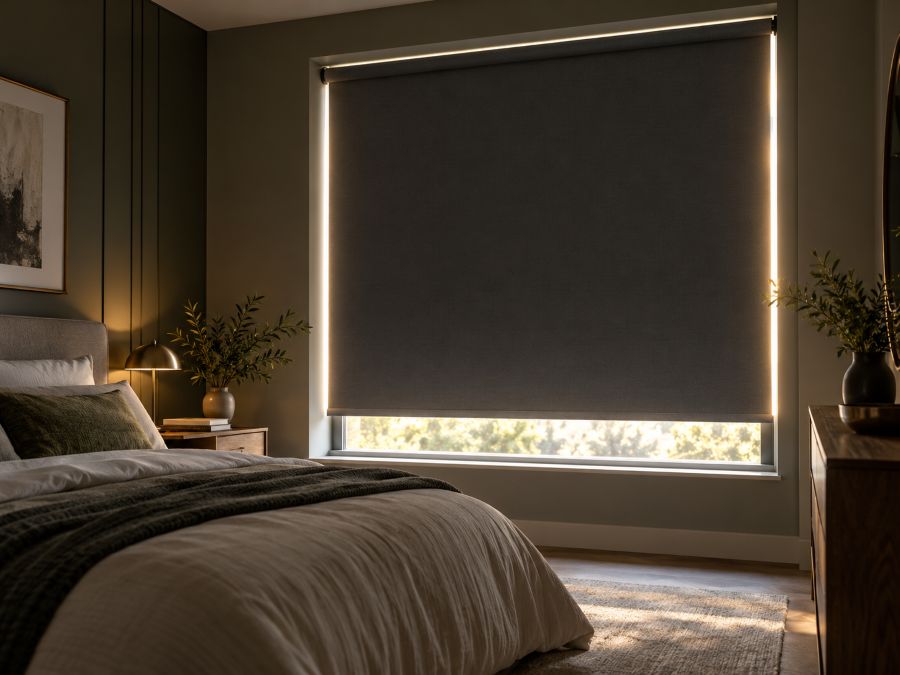
You lowered the blind. The label says blackout. Yet a bright line runs down the side at 5 a.m., just when you hoped to sleep in. That glow rarely means something is wrong. If you're asking why blackout blinds let light in, this guide shows where the light gets past, how fabric, mounting and side gaps each play a part, and which changes may help, so you can choose what suits your window.
Find Out Whether Light Is Passing Through the Fabric or Around It
So why do blackout blinds let light in? It usually comes down to fabric, fit, or mounting. Work out which one first.
Inspect the Sides, Top and Bottom With the Blind Fully Lowered
Check on a bright morning with the room lights off:
- Edges: a thin bright line points to a side gap
- Top: a glow near the headrail means light is getting around the roller
- Bottom: light under the bottom bar points to the sill or window shape
- Across the face: a soft, even glow suggests light passing through the fabric
Distinguish Room-Darkening Fabric From an Installed Blackout System
Fabric controls light passing through. Installation controls light passing around.
| Term | What It Means |
| Room-darkening | Blocks most light; some still passes through |
| Blackout fabric | Opaque; blocks light through the material |
| Blackout system | Opaque fabric plus fit, mounting, and edge details |
Fabric alone can't promise a fully dark room. The fit matters just as much.
Why Side Gaps Can Remain With an Inside Mount
An inside mount sits within the window frame for a clean, built-in look. Small gaps are a normal part of how it fits.
Fabric Width, Hardware Clearance, and Uneven Window Frames
- Fabric width: the fabric is cut slightly narrower than the opening so the blind moves freely
- Hardware clearance: brackets and the roller need room at each end
- Uneven frames: a frame that isn't perfectly square changes the gap from top to bottom
Use Photos and Measurements to Identify the Actual Light Path
- Photograph each edge with the blind down, in daylight
- Measure the visible gap at the top, middle, and bottom
- Note which side shows light
- Share these with your supplier
A few photos can save a lot of guesswork. For more on mounting basics, see inside vs. outside mount blinds.
When an Outside Mount or Wider Coverage Can Help
Outside mount blinds sit on the wall or trim around the window, so the blind overlaps the opening. That overlap can reduce light at the edges.
| Inside Mount | Outside Mount | |
| Look | Clean, built into the frame | Covers the frame; windows can look larger |
| Edge light | Small gaps are common | Overlap can reduce it |
| Needs | Enough frame depth | Clear wall or trim around the window |
Assess Overlap Around the Opening and Available Wall Clearance
- Overlap: more coverage past the frame gives light less room to slip around
- Wall space: brackets need clear wall or trim above and beside the window
- Appearance: the blind will cover the frame, which suits some rooms more than others
Check Handles, Trim and Obstacles Before Changing the Mount
Look for window handles, crank levers, deep trim, vents, or baseboard heaters. These can limit how wide a blind can be or where it can sit. Measure first, then decide.
Other Options for Reducing Light Around the Edges
Ask About Compatible Side Channels and Top Treatments
Some blind systems can be paired with side channels, which guide the fabric along the edges, or with a top treatment that covers the roller area. Availability depends on the product and the window, so ask what is compatible with the blind you're considering.
Consider a Separate Opaque Curtain Layer When the Layout Allows
A lined or opaque curtain hung wider than the window can cover the edges a blind doesn't. It also adds warmth and a softer look. It needs clear wall space and enough room for a rod.
Special Considerations for Zebra Blinds and Multiple Shades
Check Band Alignment and the Chosen Fabric Specification
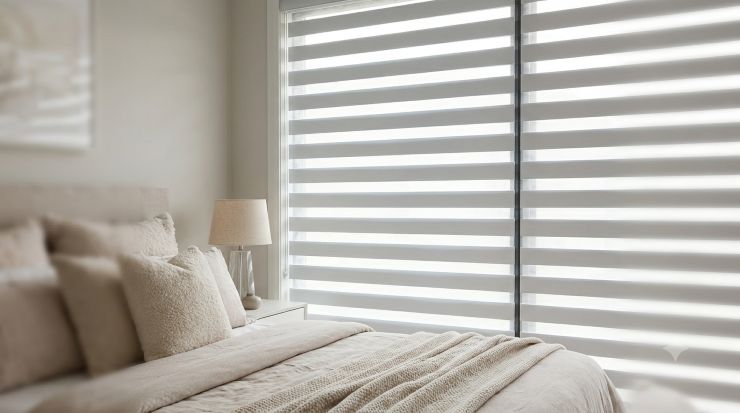
Zebra blinds Edmonton homeowners choose for layered light control block the most light when the solid bands line up fully. The fabric matters too: a light-filtering zebra lets in more light than a room-darkening or blackout one. Ask which specification you're getting. For bedroom advice, see our zebra blinds bedroom guide.
Review Gaps Between Adjacent Shades on Wide Windows
On wide windows, shades sit side by side, and a small gap can show between them. Ask whether they can sit closer together or overlap slightly, and how the headrail will be arranged.
Prepare a Light-Control Checklist Before Ordering
When comparing window blinds in Edmonton, a short checklist keeps the conversation focused.
Explain Whether the Room Needs Glare Reduction or Daytime Darkness
A home office may only need glare control. A bedroom or a night-shift sleeper's room may need daytime darkness. Say which, because it shapes the fabric, mount, and edge details.
Request Installation Details and Review Samples in the Actual Room
- Ask how the blind will be mounted and what gap to expect
- Ask about channel or top options for your window
- View samples in the room, in daylight and at night
- Bring your photos and measurements
For the sleep side of the story, read how blackout blinds can improve your sleep.
Ask Sun Blinds to Assess Your Window's Light Gaps
Blackout blinds are made to block light, and most do the job well. The glow you notice usually comes from the gaps around them, not from the fabric. Once you know where light is getting in, you can compare your options: mounting, edge details, a curtain layer or a different shade layout.
If you're looking for blackout blinds Edmonton homeowners can rely on, Sun Blinds Inc. has been helping local households for over a decade, with custom blinds in Alberta made to fit each window. Reach out and ask the team to take a look.
Frequently Asked Questions
Q1. Can blackout fabric still leave a bright gap at the sides?
Yes. Fabric blocks light passing through it, but the blind is cut narrower than the opening. Mount, width, and window shape decide the gaps, so some edge glow can remain.
Q2. Will an outside mount improve blackout performance?
Often, yes. An outside mount overlaps the opening, which can reduce light around the edges. It needs clear wall space and may cover trim, so measure the window first.
Q3. Can existing blinds be fitted with light-blocking channels?
It depends on the blind and the window. Ask your supplier whether channels are compatible with your product, and share photos and measurements so they can assess the fit.
Q4. Is room-darkening fabric the same as blackout fabric?
No. Room-darkening blocks most light, but some passes through. Blackout fabric is opaque. Edge gaps affect both, so check the fabric specification and the fit together.
Q5. Can motorized blackout blinds still have side gaps?
Yes. A motor changes how the blind moves, not how it fits. Gaps depend on mounting, width, and edge options, so both types follow the same fit rules.