Condensation Behind Blinds in Winter: What Edmonton Homeowners Should Check
You open the blinds on a frosty Edmonton morning and find water on the glass, maybe a damp sill. It's a common winter worry, and it doesn't always point to a faulty window or blind. This guide explains condensation behind blinds: why it happens, where to look, how humidity and airflow play a part, how to use your blinds alongside them, and when to bring in a professional, so you can choose your next step with confidence.
Why Moisture Can Collect on Glass Behind Closed Blinds
Explain How Humid Indoor Air Meets a Cold Window Surface
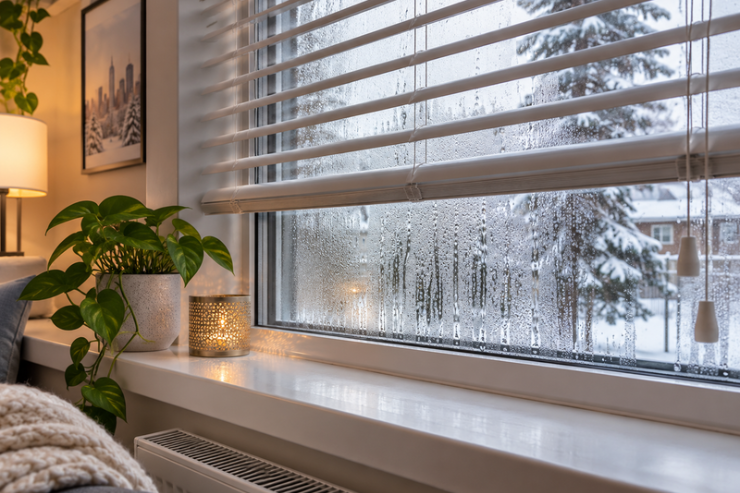
Everyday life adds moisture to indoor air: showers, cooking, laundry, even breathing. In winter, the glass is one of the coldest surfaces in the room. When warm, humid air touches it, water can form as droplets or frost. Natural Resources Canada notes the risk rises as it gets colder outside and as indoor humidity goes up.
Describe How a Closed Covering Can Restrict Nearby Air Circulation
Moving air keeps glass a little warmer, which is why heating vents often sit under windows. Closed blinds, drapes, deep sills and nearby furniture can slow that airflow, letting cool air settle near the glass. That's why moisture often shows up behind a closed blind first.
Check Where the Moisture Is Appearing
Compare Indoor Surface Moisture With Fogging Between Glass Panes
Wipe the glass. If the moisture comes off, it's on the room side. If it stays put, it's likely between the panes.
| What You See | Likely Meaning | Next Step |
| Droplets or frost on the room side | Indoor humidity meeting a cold surface | Review humidity and airflow |
| Fogging between the panes | The sealed glass unit may have failed | Speak with a window professional |
Inspect the Frame, Sill and Fabric for Recurring Dampness
- Frame and sill: look for dampness, staining or peeling paint
- Weather seals: check the edges where moisture tends to collect
- Blind fabric and bottom bar: watch for damp spots or a musty smell
- Pattern: note whether it happens daily, on the coldest nights or after showers
Photos taken over a week make the pattern easier to see.
Review Humidity and Airflow in the Room
Use a Hygrometer and Check Room Ventilation
A hygrometer is a small, low-cost gauge that shows indoor humidity. Health Canada suggests keeping relative humidity between 30% and 50%. Also check that kitchen and bathroom fans vent outside, and if your home has a heat recovery ventilator (HRV), make sure it's on.
Look for Blocked Vents, Furniture and Tightly Enclosed Window Recesses
- Vents or baseboard heaters covered by furniture or long drapes
- Couches or beds pushed up against the window wall
- Deep, narrow recesses where a closed blind sits close to the glass
A small change to the layout can let air reach the glass more freely.
Adjust Window-Covering Use Without Ignoring the Moisture Source
Open Coverings Periodically to Allow Air Movement Near the Glass
Health Canada suggests keeping window coverings open at times so warm air can reach the glass. You can choose what fits your routine:
- Open fully during the day
- Raise partway while you're home
- Open for a while after showers or cooking
Keep Coverings Dry and Follow Their Material-Specific Care Instructions
Wipe the sill and frame dry so water doesn't run onto the blind. If the fabric gets damp, let it dry fully before closing it again. Each material has its own care rules, so check the label and our guide to cleaning blinds properly.
What to Discuss When Choosing Blinds for a Cold Window
Balance Privacy and Comfort With Accessible Glass and Sill Inspection
Every blind style offers its own mix of privacy, light control and comfort. Honeycomb blinds in Edmonton are popular for cold windows, while roller and zebra blinds suit many rooms. Whichever you prefer, think about how easily you can see and wipe the glass and sill behind it. For more on winter comfort, see keeping your home warm with blinds and curtains.
Review Fit and Clearance With the Installer Rather Than Assume a Universal Gap
There is no universal gap between blind and glass. It depends on the blind type, the window recess and the mount. Ask the installer how much clearance your window will have, and how the blind sits when open and closed. Made-to-measure blinds let that fit be planned around your window.
When the Problem Needs Building or Moisture Assessment
Escalate Recurring Wet Frames, Persistent Inter-Pane Fogging or Damaged Finishes
- Frames or sills that are wet most mornings
- Fogging between the panes that doesn't clear
- Peeling paint, staining, soft wood or a musty smell
- Mould that returns after cleaning
These signs point beyond blinds. A window or building professional can look for the source.
Follow Official Moisture and Mould Guidance Instead of Covering Up the Problem
Health Canada says mould can start growing within 48 hours of excess moisture, and it returns if the moisture isn't fixed. Painting over it only hides it for a while, and bleach isn't recommended for cleanup. Natural Resources Canada and Health Canada both publish plain-language guidance worth reading.
Discuss Window Fit and Winter Use With Sun Blinds in Edmonton
Condensation behind blinds is usually humidity meeting cold glass, not a blind problem. Checking humidity, airflow and the glass itself gives you the full picture, and your blinds can be part of a routine that keeps moisture easy to spot.
If you're looking for window blinds in Edmonton that suit your windows and winters, Sun Blinds Inc. has been helping local homeowners for over a decade. Their custom blinds are made to your measurements, and the team can talk through fit, clearance and winter use before you decide.
Frequently Asked Questions
Q1. Can closed blinds contribute to window condensation?
Yes. Closed blinds and drapes can restrict airflow, letting cool air pool near the glass. The moisture source is still indoor humidity, so check airflow, humidity and ventilation together.
Q2. Will replacing blinds fix persistent condensation?
Not on its own. Condensation starts with indoor humidity meeting a cold surface. Blind fit and clearance can affect airflow, but humidity, ventilation and window condition still need attention.
Q3. Why does the problem appear mainly during cold weather?
Cold weather chills the glass while indoor air stays warm and humid. When that moist air touches the cooler surface, droplets or frost can form. Higher humidity raises the risk.
Q4. What indoor humidity should I aim for in winter?
Health Canada suggests keeping relative humidity between 30% and 50%. A hygrometer shows your level, and a dehumidifier can help if windows keep fogging or humidity runs above 50%.
Q5. Is fogging between the panes caused by my blinds?
No. Fogging between the panes usually points to a broken glass seal, not your blinds. Natural Resources Canada says the sealed unit needs replacing, so speak with a window professional.