
Why Are Honeycomb Blinds in Edmonton a Smart Home Upgrade?
Honeycomb blinds in Edmonton aren’t just another décor choice—they’re a practical fix for real home comfort problems. If your living room feels icy near the windows in January or turns into a heat trap in July, you already know how frustrating it is.
Heavy curtains block the view. Sheer ones do nothing for insulation. You need something that works year-round, looks clean, and makes every room feel more balanced. Let’s break it down, step-by-step, so you can see exactly why this upgrade is worth serious consideration.
What are honeycomb blinds—and why do they work?
Think of a clean, fabric shade made of small air pockets (cells). When you lower the blind, those cells trap air—like a padded jacket for your window. That trapped air slows heat loss in winter and heat gain in summer. You feel steadier room temperatures with less effort from your furnace or AC. That’s the core benefit, and it’s the reason these blinds earn a reputation as a “smart upgrade.”
How do honeycomb blinds in Edmonton save on energy bills?
Short answer: insulation. Long answer: more cells, tighter fit, smarter fabric.
- Cell structure: A single cell helps. Double-cell insulates better. Larger cells look sleek on big windows. Smaller cells bend neatly on narrow frames.
- Fabric choice: Light-filtering lets in daylight while softening harsh rays; blackout adds another layer of thermal help and blocks light for bedrooms.
- Fit matters: Inside mount looks built-in. Outside mount can cover older, drafty frames more fully. Add light-blocking side tracks if you want the snuggest seal.
- Daily behaviour: You’ll actually use them. Up for winter sun, down at night to keep warmth in. That rhythm alone moves the needle.
You don’t need to become an energy nerd. You just need blinds that help your windows behave.
Which honeycomb blinds in Edmonton keep homes warm in winter?
When warmth is the priority, go precise:
- Choose a double-cell for living rooms and bedrooms with noticeable drafts.
- Pick a thicker fabric or blackout for north-facing rooms where the sun is scarce.
- Mount with intention: If your trim is shallow, we’ll use a low-profile headrail. If frames are uneven, the outside mount hides the imperfections and tightens the seal.
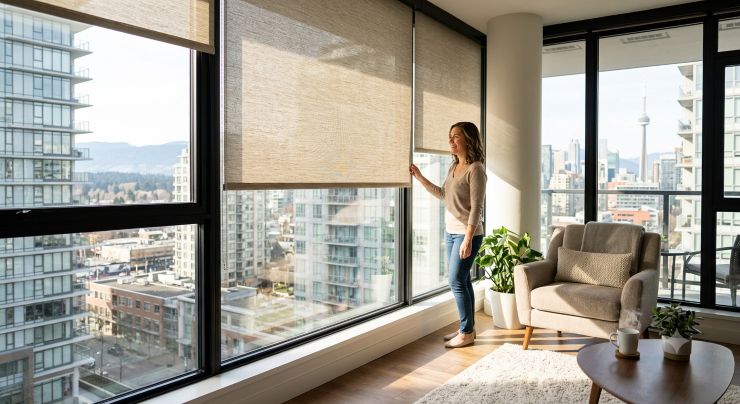
- Mind the stack: Honeycomb shades compress into a slim stack at the top. No bulky roll means more winter sunlight when raised.
If you feel that “cold drop” near the sofa every January, this is the upgrade you’ll notice.
Which honeycomb blinds in Edmonton work best for privacy and light?
You want light during the day and privacy at night. Easy:
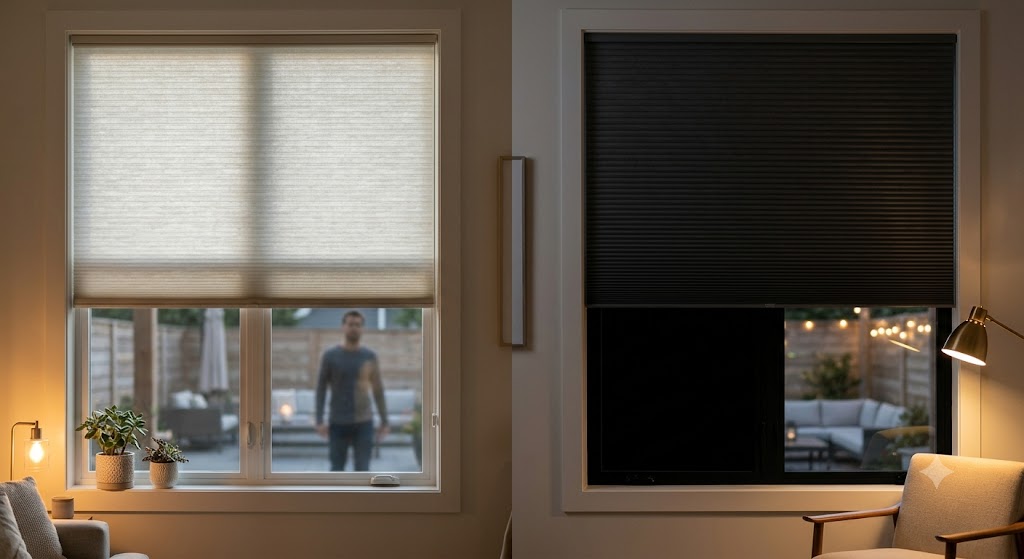
- Top-down/bottom-up: Keep the lower half covered for privacy while the upper half invites sky light. Great for street-level windows.
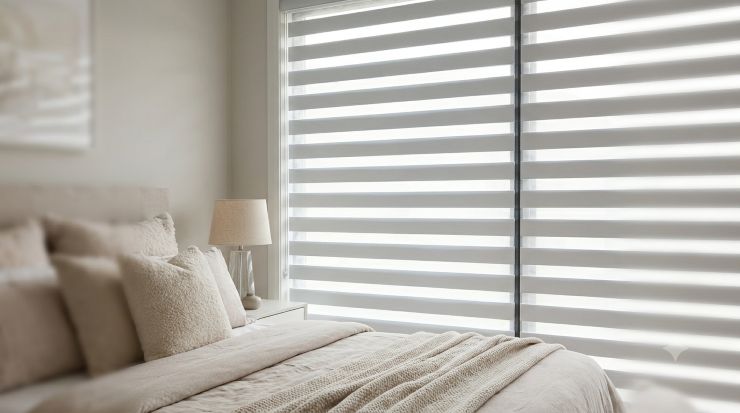
- Day-night combo: One rail, two fabrics—soft light for daytime, blackout for sleep.
- Blackout for bedrooms: Night shift? Early bedtimes? Streetlights? Go blackout. For kids’ rooms, pair blackout with cordless for safety.
You control the view without turning your home into a cave.
What about moisture, kitchens, and bathrooms?
Kitchens and baths get steam and splashes. Honeycomb fabrics handle daily humidity well, but direct water is never ideal for any textile.
- Ventilate: Run exhaust fans.
- Placement: Keep shades clear of sinks and tubs; consider an outside mount to create a slight buffer.
- Material choice: For splash zones, we might recommend a moisture-resistant fabric or a different product on that one window while keeping honeycombs elsewhere for a cohesive look.
Right product, right spot. That’s smart, not stubborn.
Your “treatment plan”: how Sun Blinds approaches your home
We use a step-by-step framework—like a basic medical plan, but for your windows.
- Intake – You describe the symptoms: drafts, glare, privacy gaps, tricky frames. We listen.
- Assessment – We look at exposure, frame depth, trim, room use, and how you live day to day.
- Options – Single vs. double cell, fabrics, top-down/bottom-up, blackout, cordless or motorized. Clear trade-offs, no jargon.
- Fitting – Precise measurements. Inside mount where it’s clean and tight. Outside mount where frames need coverage.
- Installation – Fast, tidy, level. The shade should glide with two fingers.
- Aftercare – How to clean, how to operate, when to call us if anything feels off.
You get a result that makes your home feel calmer, warmer, and easier to live in.
Care and maintenance: simple “aftercare” you’ll follow
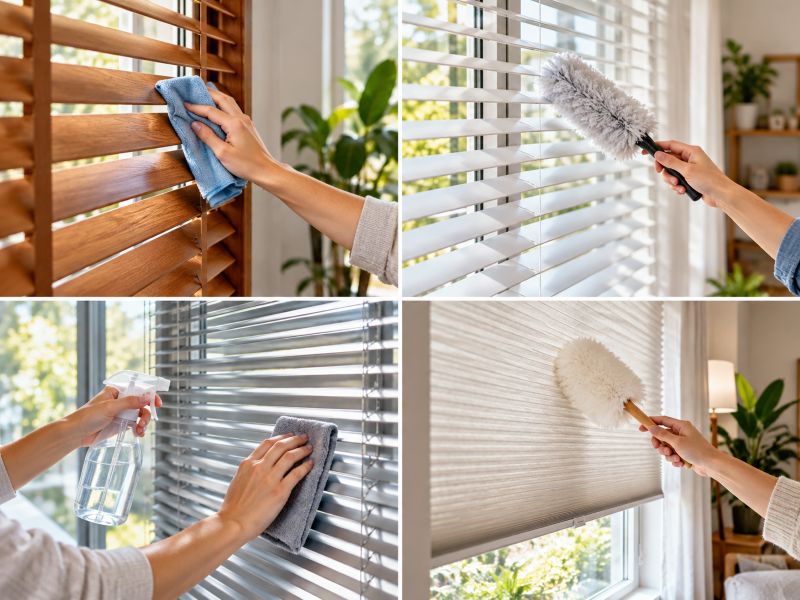
- Weekly: Light vacuum with a brush attachment, quick top to bottom.
- Monthly: Spot clean with a barely damp cloth. No harsh cleaners.
- Seasonal check: Make sure the shade raises and lowers smoothly. If it doesn’t, we’ll adjust it.
- Smart tip: In winter, open south-facing shades for passive solar heat during the day; close at dusk to keep warmth in.
Consistency matters more than effort. Small habits keep your blinds looking new.
Bringing it back to your home
You want fewer cold corners. Softer light. Real privacy. You want window coverings that work as hard as your thermostat. Honeycomb blinds make that happen with insulation you can feel and controls you’ll use. And because they compress neatly and look clean, they support your style instead of fighting it.
At Sun Blinds, we guide you through the choices so you don’t settle for “good enough.” We measure precisely, recommend the right cell, mount for your frames, and install so everything glides. You’ll feel the difference the first cold night—and every bright morning after.