Why Are Solar Shades Trending in Canada? Find Out
You close your blinds to beat the heat and suddenly the room feels like a cave. You leave them open and watch the sun bleach your furniture and turn your screen into a mirror.
Solar shades sit right in the middle of that problem. In this blog you will get to know what sunscreen shades are, how the fabric actually works, what openness factor means, and which rooms in a Canadian home needs it the most.
What Makes Sunscreen Shades Different
Most window coverings make you choose between light or privacy, view or protection. Sunscreen shades are built around a different idea entirely.
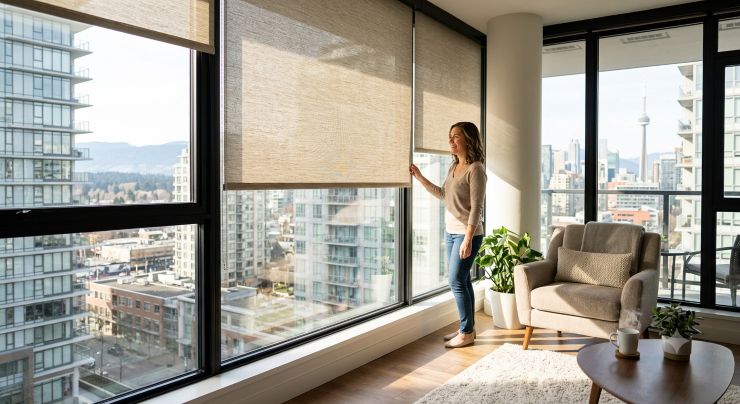
The fabric is woven rather than solid. That open weave lets natural light filter into the room while a special coating on the threads blocks a significant portion of UV rays before they reach your furniture, floors, and skin. You keep the view. You keep the light. The harsh part gets filtered out.
Here is what Sunscreen shades do in practical terms:
- Block UV rays that cause furniture, flooring, and artwork to fade over time
- Reduce glare on screens, such as, televisions, monitors, and kitchen displays
- Maintain an outward view even when the shade is fully down
- Keep the room feeling bright without the heat and harshness of direct sun
Solar vs Light-Filtering: The Real Difference
| Feature | Sunscreen Shades | Light-Filtering Shades |
| UV protection | High; fabric designed for it | Moderate; reduces light, not UV specifically |
| Outside view | Maintained during the day | Limited to none |
| Glare reduction | Strong | Moderate |
| Room brightness | Bright and even | Softer, more diffused |
| Best use | Rooms with screens or sun-facing windows | Rooms needing soft ambient light |
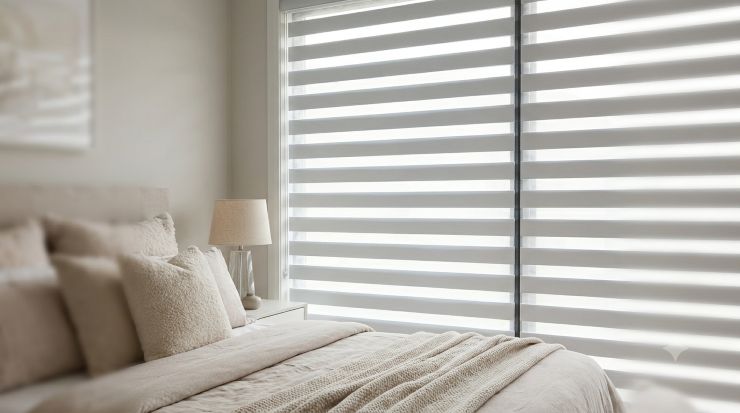
Light-filtering shades soften the light coming in. Sunscreen shades intercept it by letting the visible light through while stopping the damaging and uncomfortable parts. Both are valid choices. They just solve slightly different problems.
Why Canadian Summers Make Them Worth It
Canada has a reputation for cold winters, but during summers Edmonton regularly sees intense sun for 16 to 17 hours a day at peak season. South and west-facing windows take the full force of that afternoon sun and standard window blinds in Edmonton weren't always designed with that in mind.
Three things make Sunscreen shades well-suited to Canadian summers:
- UV intensity: Canadian summer sun, especially at higher altitudes and latitudes, carries strong UV even on overcast days. Sunscreen fabric blocks a significant percentage of that before it enters the room
- Furniture protection: Prolonged UV exposure fades upholstery, warps wood, and discolours flooring. A Sunscreen shade on a south-facing window actively extends the life of what's inside the room
- Heat gain: Sunscreen shades reduces direct solar heat gain through the glass and controls the room from getting hot on a summer afternoon
For anyone dealing with a room that becomes uncomfortable between noon and 5 PM, this is a meaningful difference.
Openness Factor: How Much Is Required
Openness factor refers to how much of the fabric is open weave versus solid material expressed as a percentage.
| Openness % | Outside View | UV Block | Best For |
| 1–3% | Limited but present | Very high | West-facing rooms, intense sun exposure |
| 5% | Clear during the day | High | Living rooms, home offices, most common choice |
| 10% | Very clear | Moderate | Rooms where view is a priority |
| 15% | Maximum clarity | Lower | Mild sun exposure, view-focused spaces |
The lower the openness percentage, the more the fabric blocks both UV and visibility. The higher the percentage, the more open and transparent the weave, which means a clearer view but less filtration.
There is no universally correct number. The right openness factor depends on how much sun the window receives, what's in the room, and how much the outside view matters to you.
Can Solar Shades Give You Privacy?
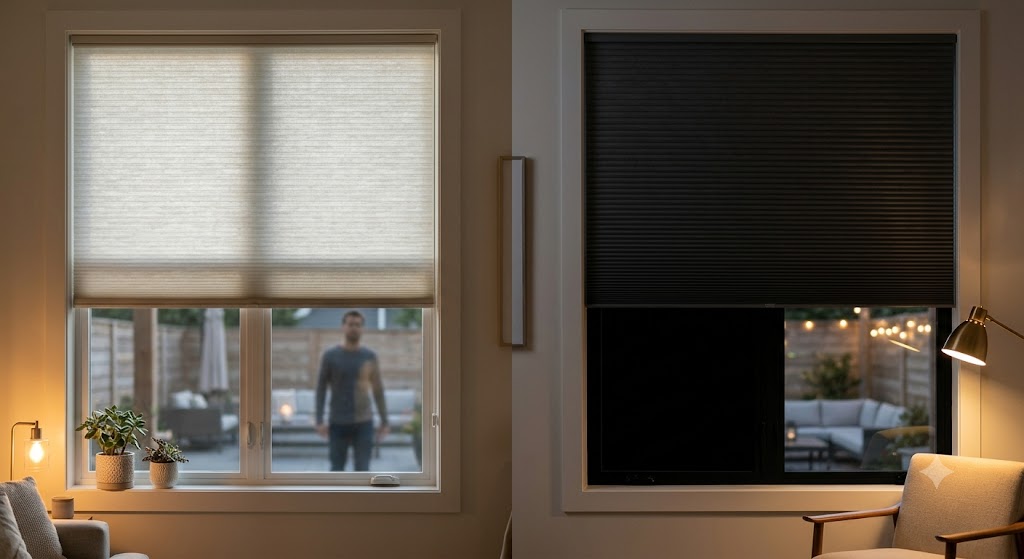
During the day, yes. Sunscreen shades make it difficult to see into your room from outside. At night, when interior lights are on, that visibility shifts.
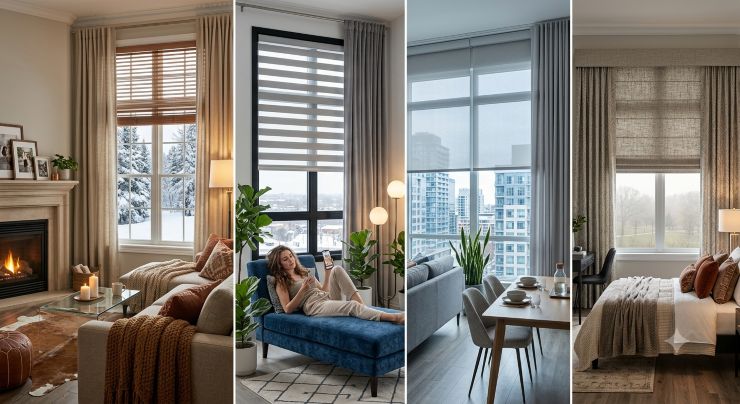
Pairing a sunscreen shade with a second roller or curtain panels gives you the best of everything: UV protection and an open view during the day, full privacy after dark. It's the same curtain-and-blind layering approach that's been growing across Canadian homes, and it works particularly well here.
What a layered setup gives you:
- Sunscreen shade down during the day: glare blocked, view maintained, UV filtered
- Curtain or second roller closed at night: complete privacy, no compromise
- Windows and blinds working together: each layer doing a different job at a different time
- One window, two functions, zero trade-offs
Which Rooms Benefits The Most
Sunscreen shades are not a one-room solution. Here is where they tend to make the most noticeable difference:
| Room | Why Sunscreen Shades Work Here |
| Living room | Glare on screens, afternoon sun, furniture protection |
| Home office | Monitor glare, consistent daylight without harshness |
| Kitchen | Bright and functional light without direct heat gain |
| Sunroom or conservatory | Maximum sun exposure, filtration is essential |
| Dining room | South or west-facing rooms that get strong midday sun |
Bedrooms are the one room where Sunscreen shades are less commonly chosen as a standalone option, most people want full blackout for sleep. They can work in a bedroom that faces north or east with gentler morning light, but for west-facing bedrooms, a blackout blind in Edmonton is usually the stronger call.
A Shade Built Around the Sun
Solar shades or Sunscreen shades exist because standard roller blinds were never designed with UV protection as a priority. They fill a specific gap that a lot of Canadian homes have been working around for years.
If your room gets intense sun, if your furniture is starting to show fade lines, or if glare has become a daily frustration, Sunscreen shades are worth understanding properly before your next window covering decision.
Sun Blinds Inc. carries Sunscreen roller shades in 1%, 3%, 5%, 10%, and 15% openness across their roller blinds range, each suited to a different level of sun exposure and view preference. Browse the options or book a free consultation to find the openness factor that fits your windows.
FAQs
Q1: Are solar shades the same as blackout blinds?
No, they work oppositely. Sunscreen shades filter UV while maintaining an outside view. Blackout blinds block all light entirely. They solve different problems and suit different rooms.
Q2: Do solar shades keep a room cooler in summer?
They reduce direct solar heat gain through the glass, which makes a noticeable difference in sun-facing rooms. They are not an insulating product but do help manage afternoon heat buildup.
Q3: Can I see through solar shades at night?
At night, when interior lights are on, the fabric becomes more transparent from the outside. For full nighttime privacy, pairing with curtains or a second roller is the practical solution.
Q4: What openness factor should I choose for a home office?
A 5% openness factor is the most common choice for home offices, enough UV and glare reduction to protect screens and eyes while still keeping the room feeling open and bright.
Q5: Do solar shades work on all window types?
Yes, sunscreen shades operate on a standard roller mechanism and can be fitted to most window types including casement, double-hung, and sliding windows. Custom sizing is available for non-standard dimensions.